OCR · GCSE · English Literature
Poetry across time
Master OCR GCSE Component 02: Poetry Across Time. This guide breaks down the skills needed to confidently analyse studied anthology clusters and unseen poetry, ensuring you secure maximum marks across all Assessment Objectives.
- 3 min read
- 2 worked examples
- 4 practice questions
- 8 key terms
Study Notes
Overview
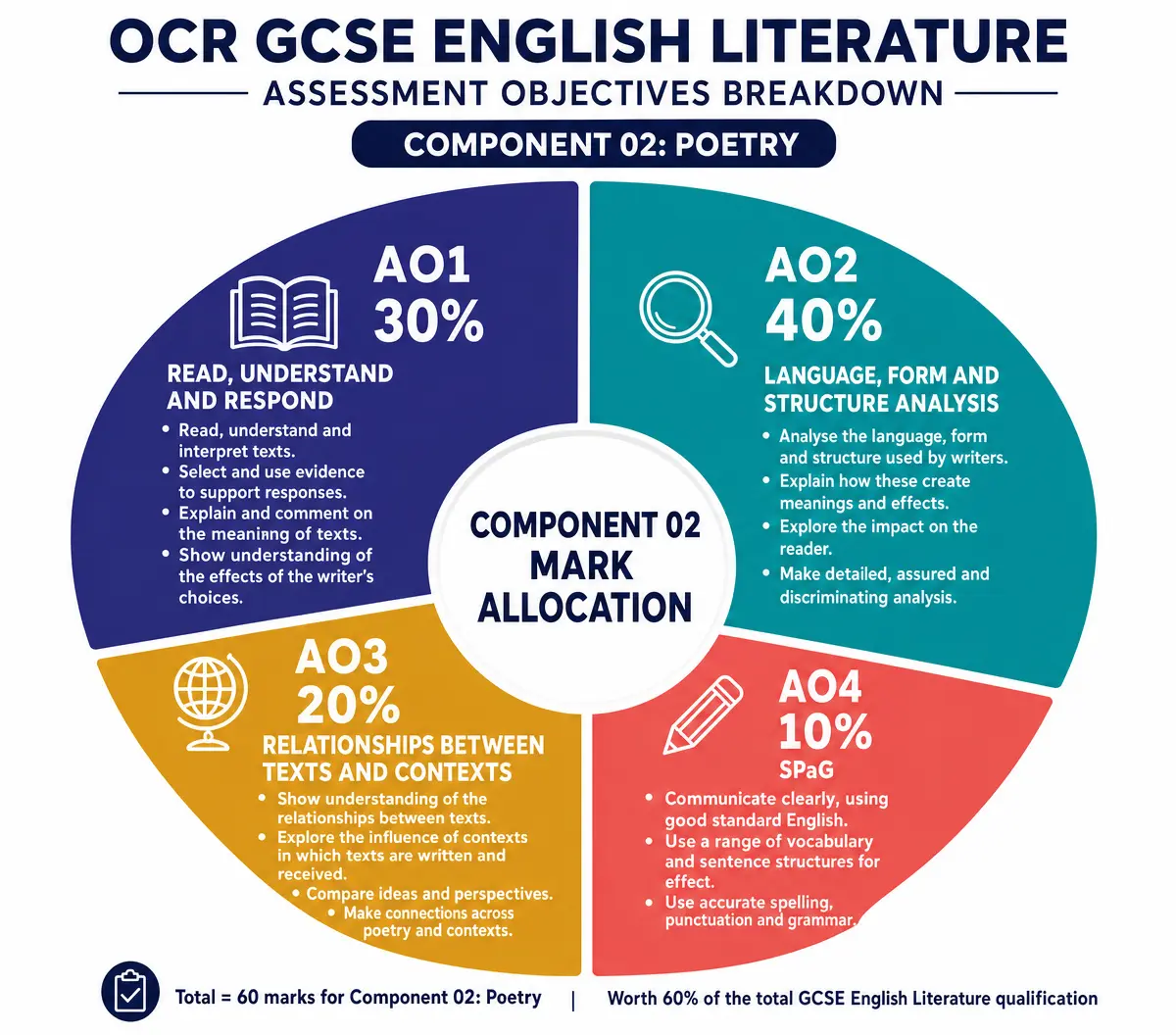
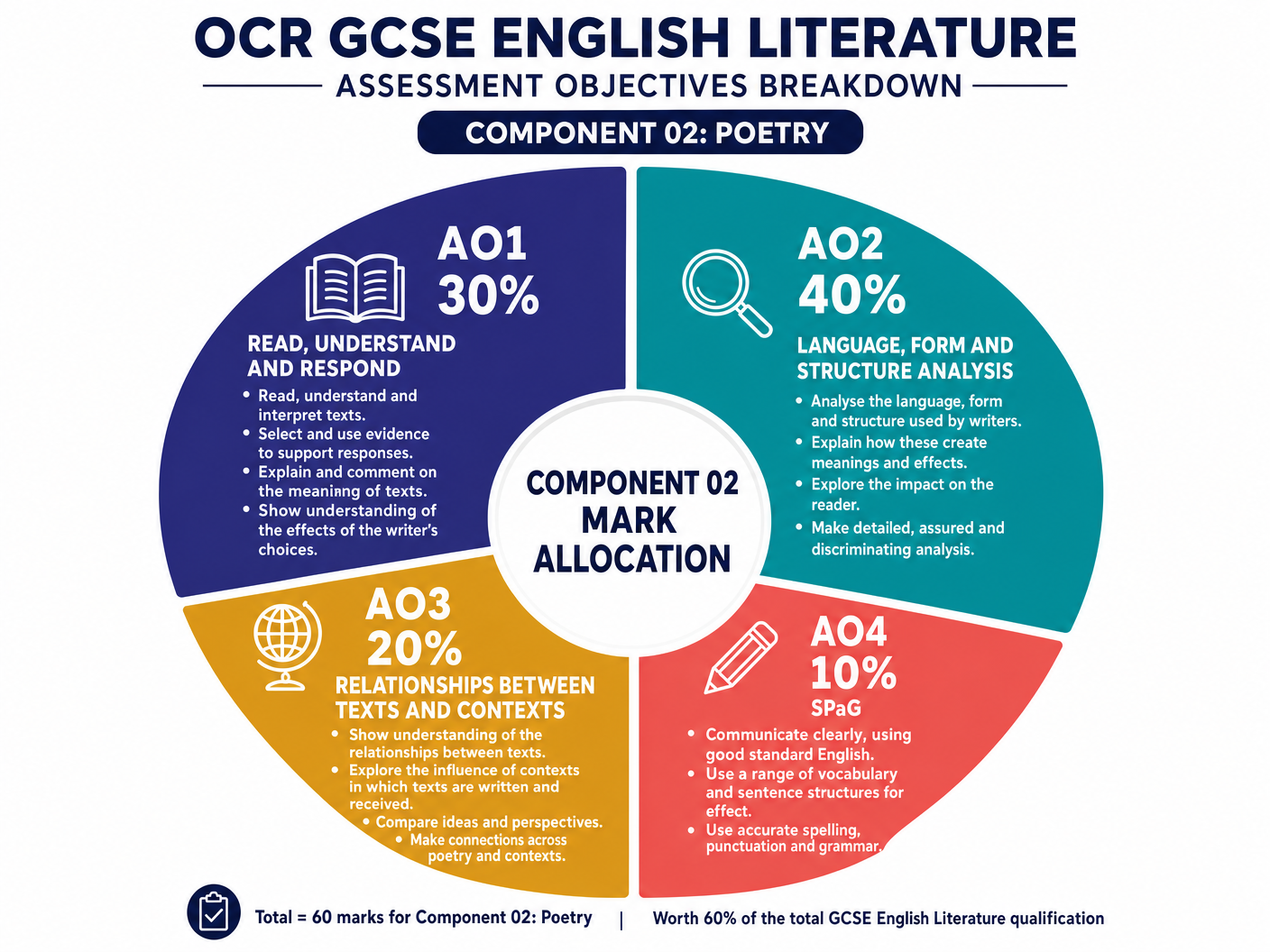
OCR GCSE English Literature Component 02 is a challenging but deeply rewarding paper that tests your ability to read, interpret, and compare poetry. Examiners are looking for a sustained, informed personal response (AO1), rigorous analysis of language, form, and structure (AO2), and a seamless integration of context (AO3). Remember, AO4 (SPaG) is also assessed here, so clarity and accuracy are paramount.
Listen to our comprehensive audio guide for a deeper dive into the core concepts and exam techniques:
Assessment Objectives Breakdown
To succeed, you must understand exactly what the examiner is looking for. The marks for this component are heavily weighted towards AO2 (analysis of methods).
Thematic Clusters
The OCR anthology is divided into thematic clusters (e.g., Love and Relationships, Youth and Age). Your task is to understand the connections between poems within your chosen cluster. Examiners reward candidates who can fluently compare how different poets approach similar themes.
Key Analytical Approaches
When analysing any poem, you must move beyond simply identifying techniques ('feature-spotting'). Instead, explore the effect of those techniques. For example, if a poet uses enjambment, how does it affect the pace and rhythm? Does it create a sense of fragmentation, or mimic natural speech?
Essential Focus Areas:
- Voice and Tone: Who is speaking? What is their attitude towards the subject?
- Imagery and Metaphor: How do visual comparisons deepen the reader's understanding?
- Form and Structure: Is it a sonnet, free verse, or a dramatic monologue? How does the shape of the poem reflect its meaning?
Comparing Poems: The PETAL Framework
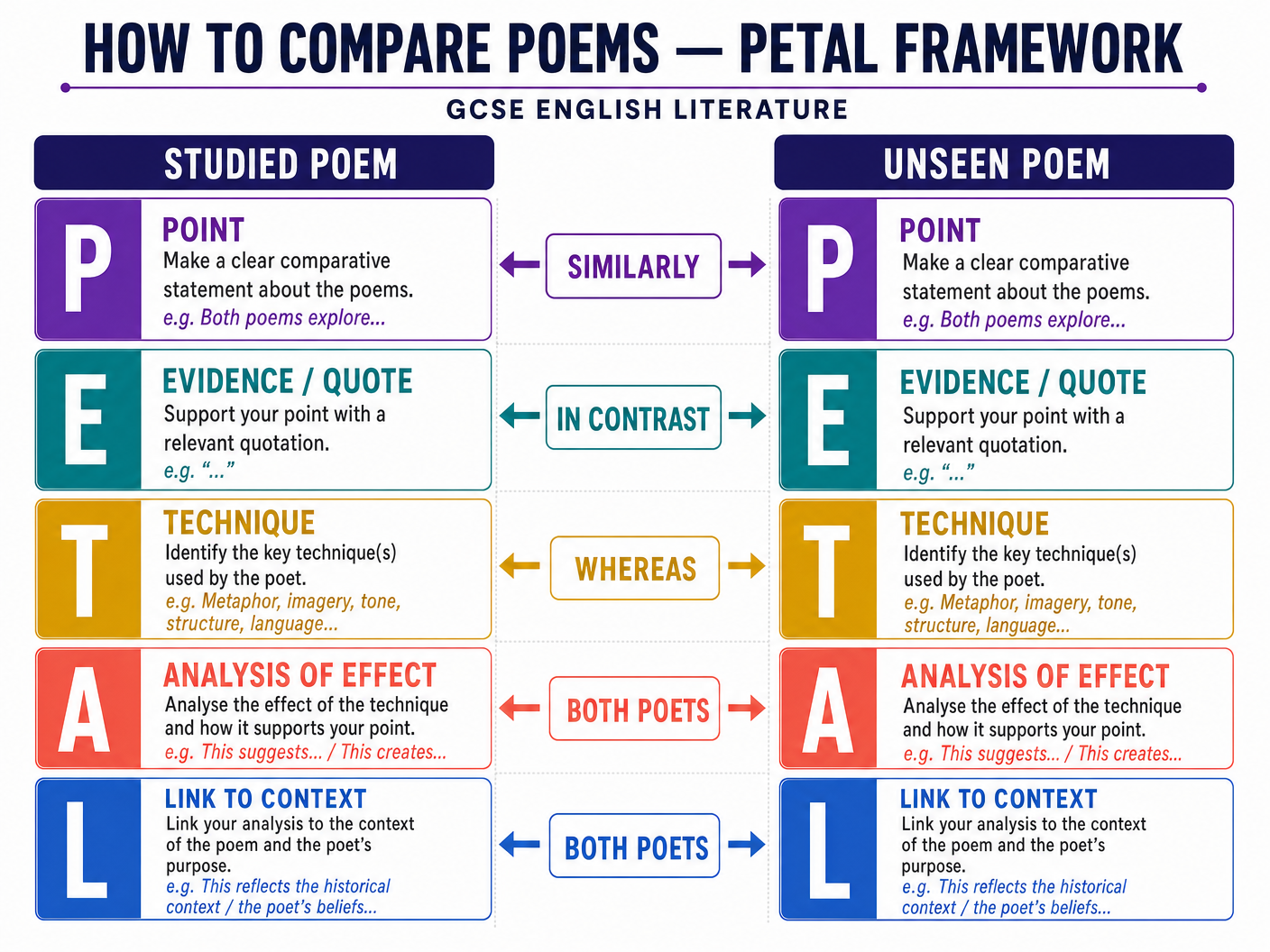
In the exam, you will be required to compare a poem from your studied cluster with an unseen poem. This is where many candidates struggle, often writing about one poem and then the other, rather than genuinely comparing them.
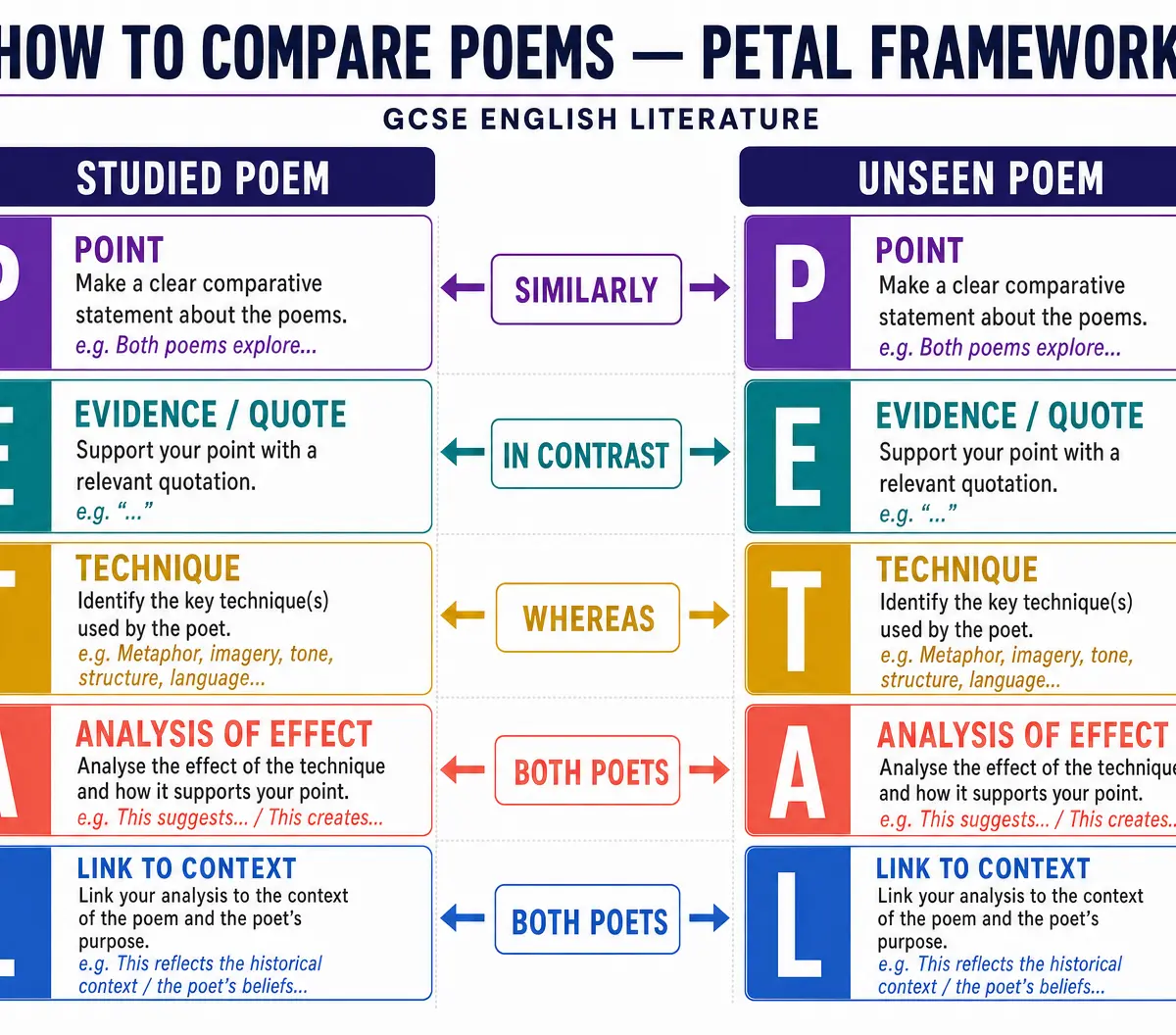
The PETAL framework (Point, Evidence, Technique, Analysis, Link) ensures your paragraphs remain comparative and analytically rigorous.
Tackling Unseen Poetry
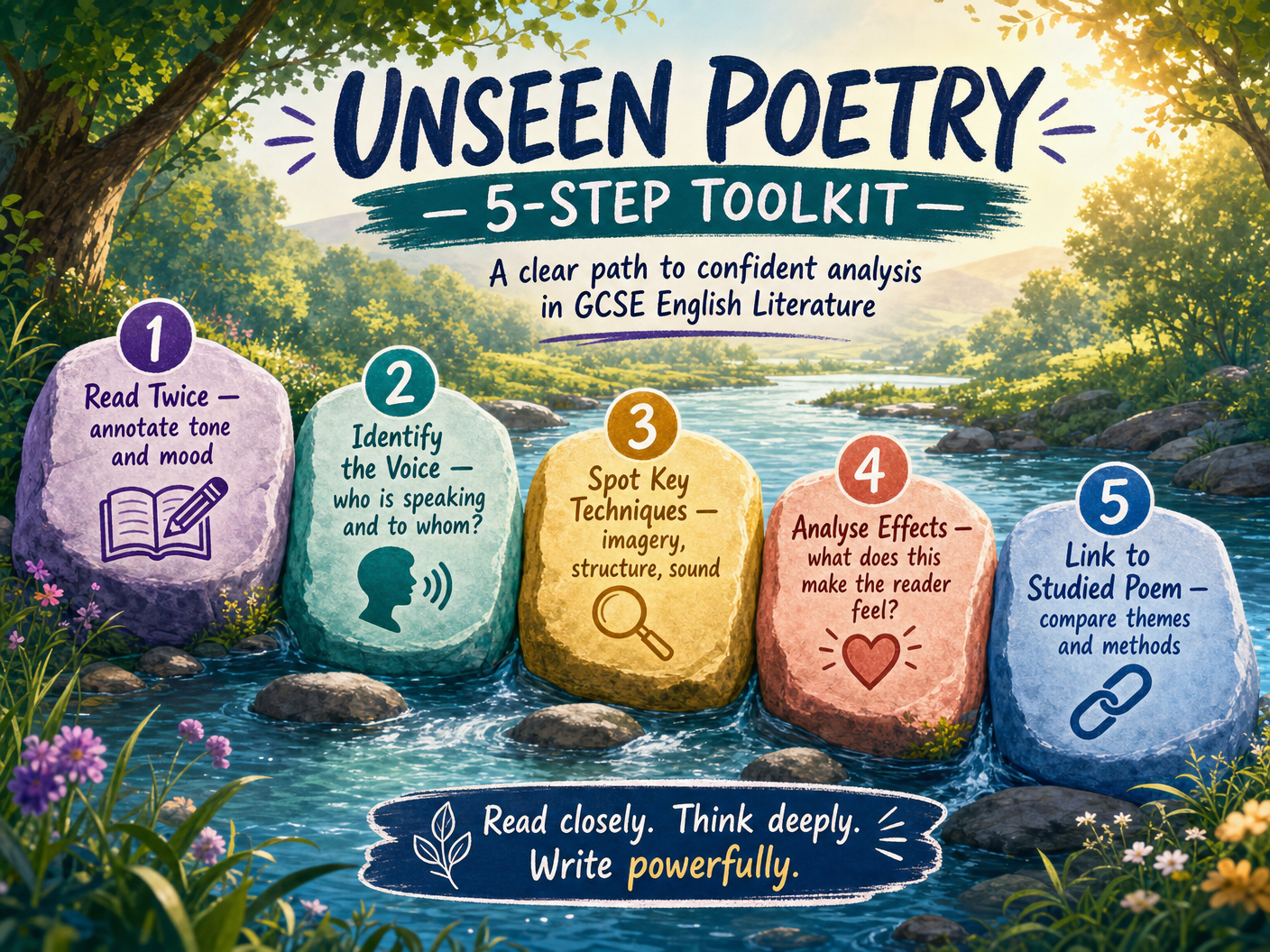
Approaching a poem you have never seen before can be daunting. The key is to remain calm and methodical. The examiner does not expect a perfect, definitive interpretation; they want to see your analytical process.
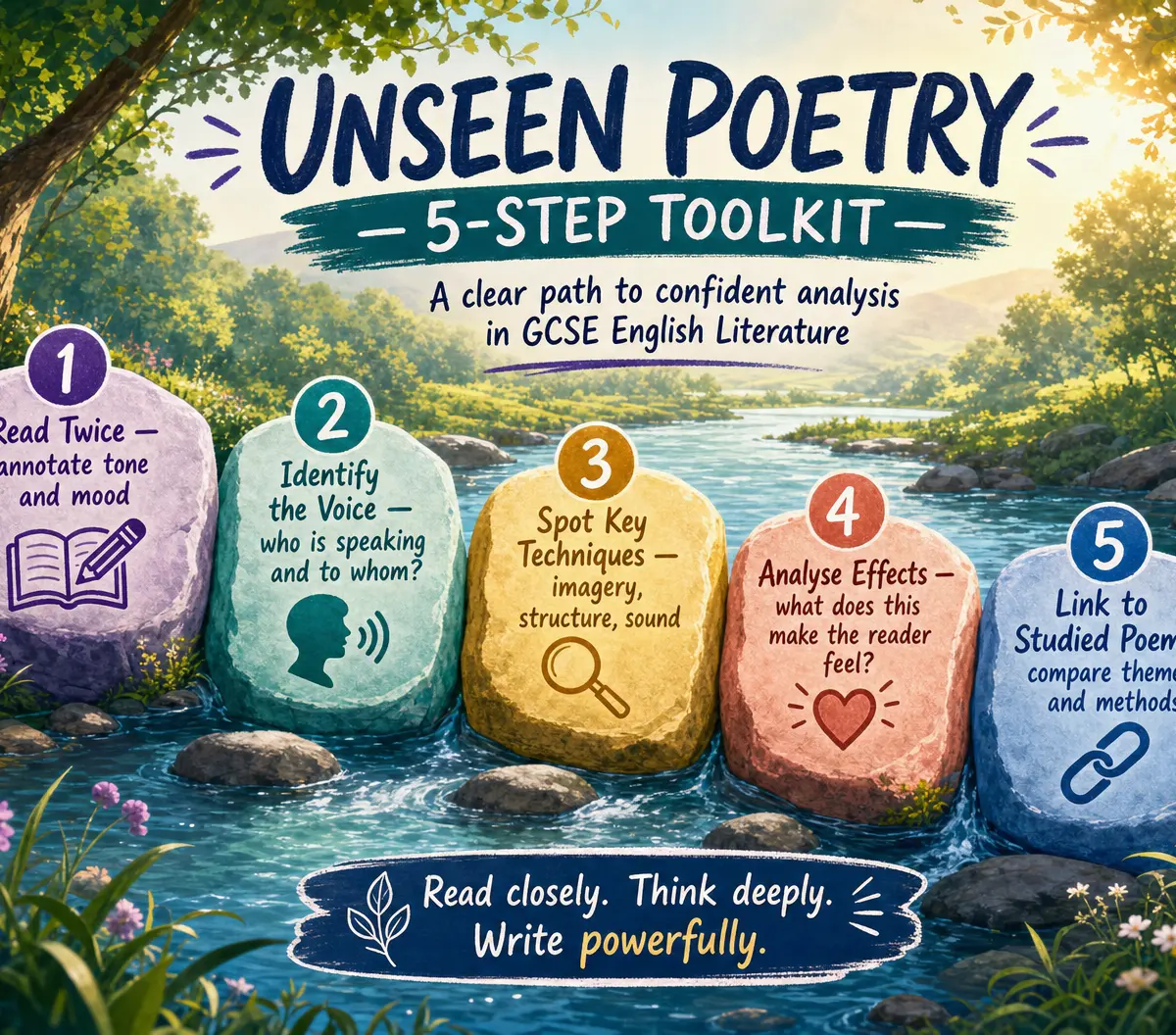
Follow the 5-step toolkit: read twice to establish tone, identify the voice, spot key techniques, analyse their effects, and finally, link your findings back to your studied poem.
Visual Resources
3 diagrams and illustrations
Interactive Diagrams
1 interactive diagram to visualise key concepts
Conceptual Flow Outline
Workflow for tackling the comparative poetry essay.
Worked Examples
2 worked examples — open one to explore the question and available guidance.
Practice Questions
Test your understanding — click to reveal model answers
Compare how the poets present the power of nature in [Studied Poem] and the unseen poem.
Hint: Consider both the destructive and awe-inspiring aspects of nature. How do form and structure reflect nature's unpredictability?
Explore how the poet creates a sense of nostalgia in the unseen poem.
Hint: Look for sensory imagery and shifts in tense (past vs present).
Compare how the speakers express their identity in [Studied Poem] and the unseen poem.
Hint: Focus on the 'Voice' of the poem. Is the identity tied to place, culture, or personal history?
How does the poet use structure to convey tension in the unseen poem?
Hint: Look beyond just the words. Examine stanza length, punctuation (caesura), and rhythm.
Test your understanding of Poetry across time
Active recall beats re-reading. Take an instant quiz now to test what you’ve learned and lock it into long-term memory.
7 days Premium · Then free forever · No card, no charge